Many people eventually feel the need to reflect on their lives: Am I satisfied with what I do? Are there areas that are neglected? How can I find more balance? This is exactly where the wheel of life comes in – a proven coaching tool that helps you make your life areas visible, set priorities, and initiate targeted changes.
What is the wheel of life?
The wheel of life, also known as the "Wheel of Life," is a method originally from coaching and is now used in many areas – from personal development to teamwork to self-coaching. This method is so successful because it is intuitive and creates clarity without overwhelming. Whether in individual coaching, teams, education, or just for yourself – the wheel of life is flexible and suitable for many situations.
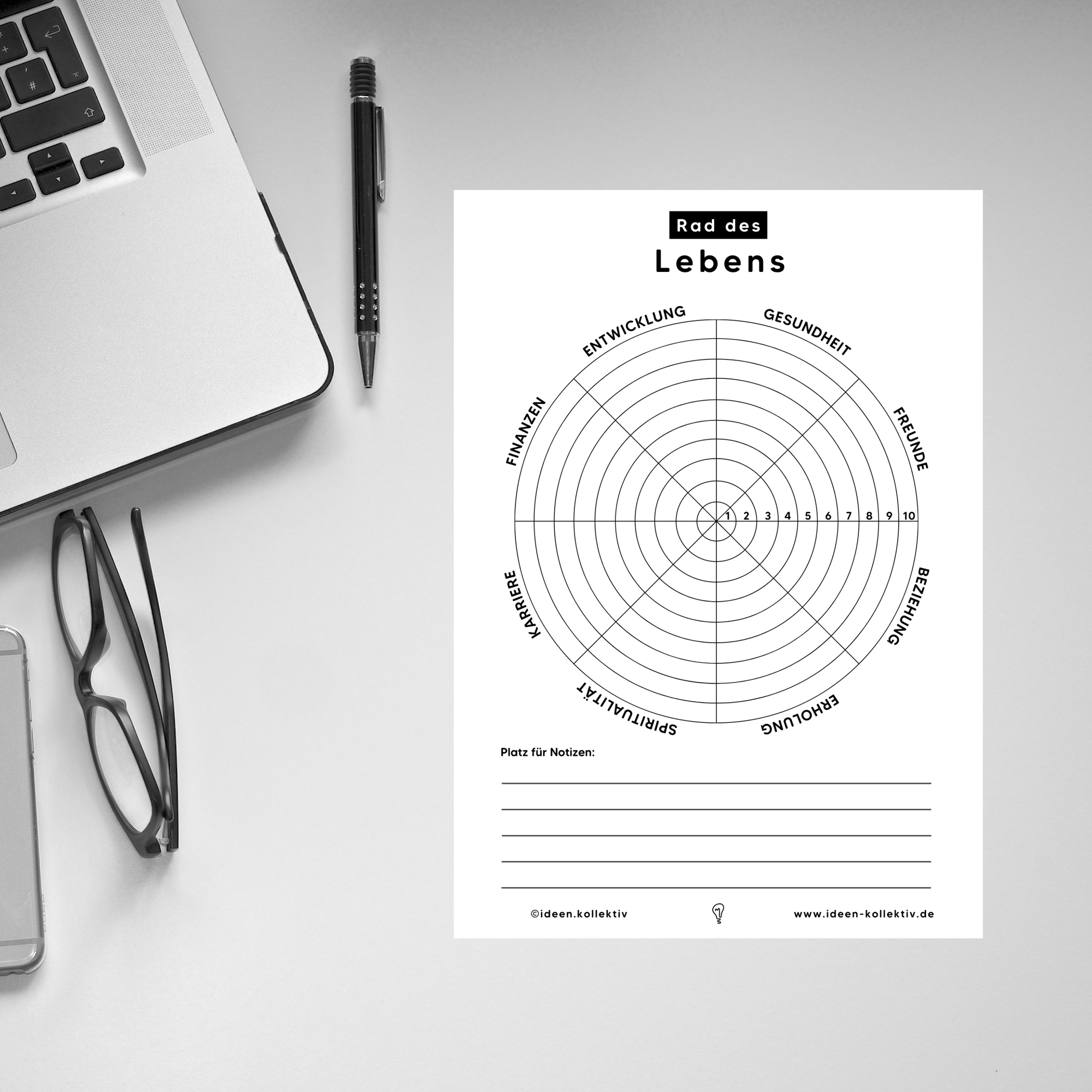
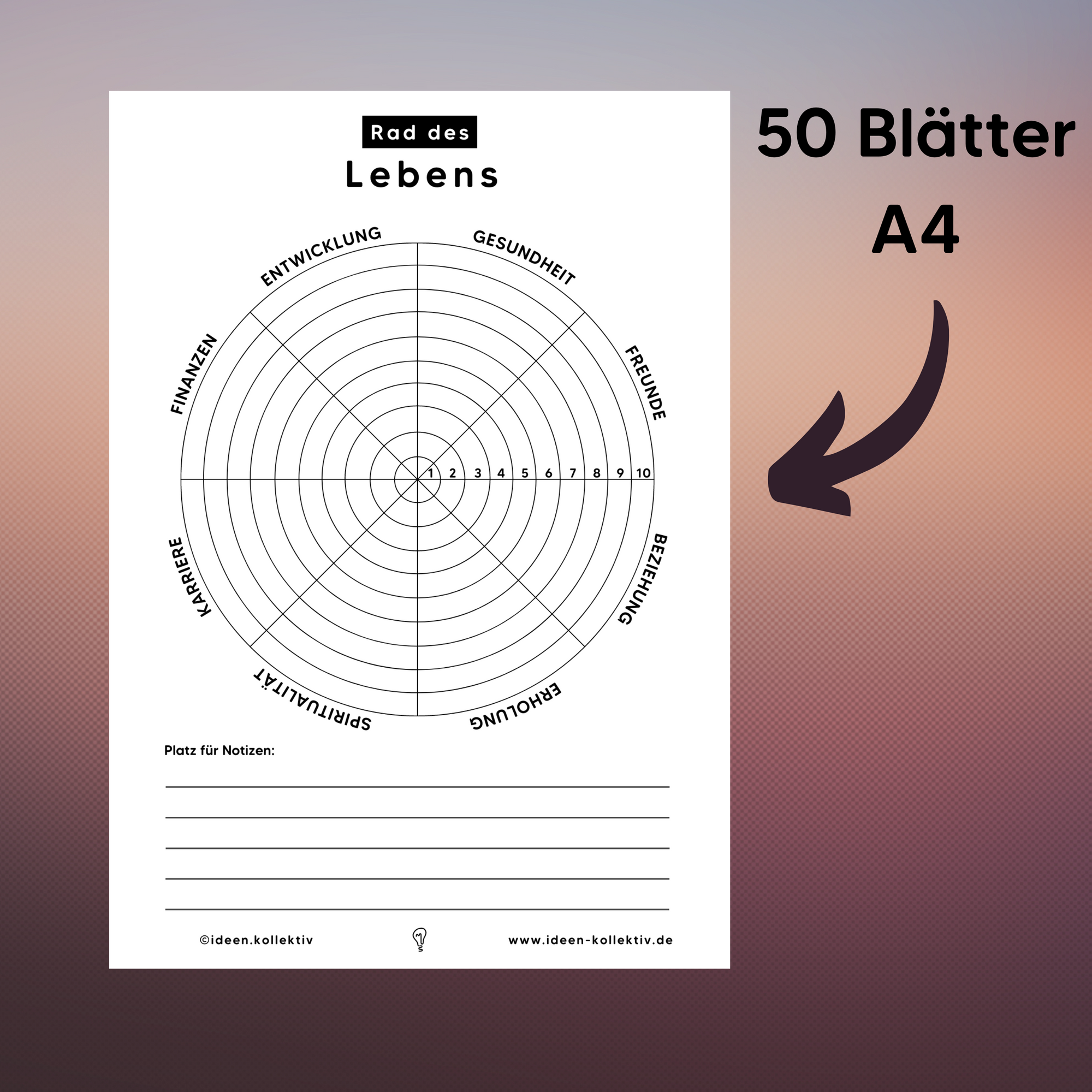
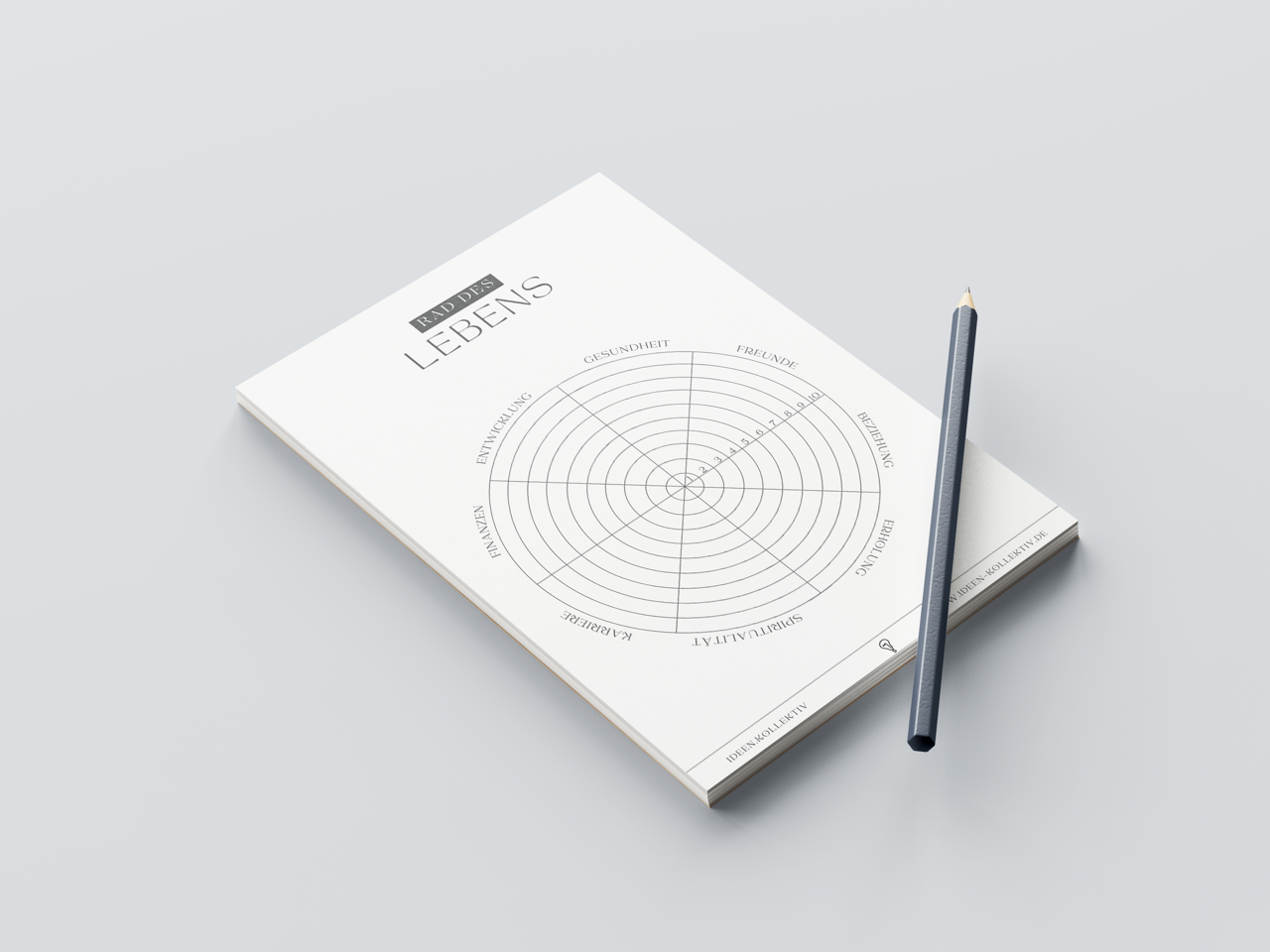
 It visualizes the most important areas of life as segments of a circle. Typical fields are:
- Health and fitness
- Family and friends
- Partnership and love
- Work and career
- Finances
- Personal development
- Leisure and hobbies
- Meaning, values, and spirituality
Of course, you can adjust or add areas depending on what is relevant to you right now.
Why the wheel of life is so helpful
In everyday life, we often lose sight of the big picture. While focusing on individual tasks or problems, other areas of life sometimes get neglected. The wheel of life helps you capture your satisfaction in various areas at a glance. This way, you quickly see where things are going well – and where action might be needed.
Benefits of the wheel of life:
- Holistic self-assessment
- Highlights strengths and areas for development
- Encourages self-reflection and motivation
- Clear prioritization of goals
- Simple, intuitive application – even without prior knowledge
Step-by-step guide: How to use the wheel of life
Define areas of life
Consider which areas of life are currently most important to you. Use the classic fields or customize them individually.
Evaluate satisfaction
Rate each area on a scale from 1 (very dissatisfied) to 10 (completely satisfied). Enter the values into the wheel and connect the points.
Recognize the pattern
Look at the resulting image: Is the wheel round or are there "dents"? Which areas are particularly strong, which less so?
Define goals and next steps
Ask yourself: Where do I want to achieve more satisfaction? What would be a first, realistic step? Note down concrete measures you want to tackle.
Document development
Repeat the exercise regularly – for example monthly or quarterly. This way you can make progress visible and adjust your goals.
Practical examples and tips
Example 1:
You notice that you give a low rating in the "Friends & social contacts" area. Your goal: reserve a fixed evening each week for joint activities.
Example 2:
In the "Career" area you are satisfied, but in "Health" there is room for improvement. A first step could be to integrate more movement into your daily routine or plan regular breaks.
Tip:
Don’t just create the wheel of life for yourself, but also together with a partner, friends, or in a team. This leads to exciting conversations and new perspectives.
Frequently asked questions about the wheel of life
Can I customize the areas individually?
Absolutely! The wheel of life is flexible – you decide which life aspects are important to you.
How often should I use the wheel of life?
Many people use it at the beginning of a new year, month, or after major changes. The more regularly you reflect, the more consciously you can steer.
Do I need prior knowledge?
No. The wheel of life is intuitive and suitable for everyone – whether in self-coaching, counseling, or teamwork.
The Wheel of Life in Coaching and Everyday Life
The wheel of life is not just a tool for individuals. It also has an impact when working with groups, teams, or in educational contexts. It promotes exchange, makes needs visible, and helps formulate common goals.
In counseling, the Wheel of Life helps identify blind spots and activate resources. Coaches use it to support people in clarifying goals and developing action steps. In teams, it can help clarify roles and responsibilities or strengthen collaboration.
Inspiration for Practice: Using the Wheel of Life Creatively
- Visualization on the floor: Lay out the Wheel of Life (PDF available here) as a large poster and stand in the different areas – this way you physically experience the differences.
- Journaling: Use the Wheel of Life as a starting point for a reflection journal. Regularly write down what you have experienced in each area.
- Checklist: Create a list of small, concrete steps for each area you want to improve.
Our Tip: The "Wheel of Life – Coaching Pad"
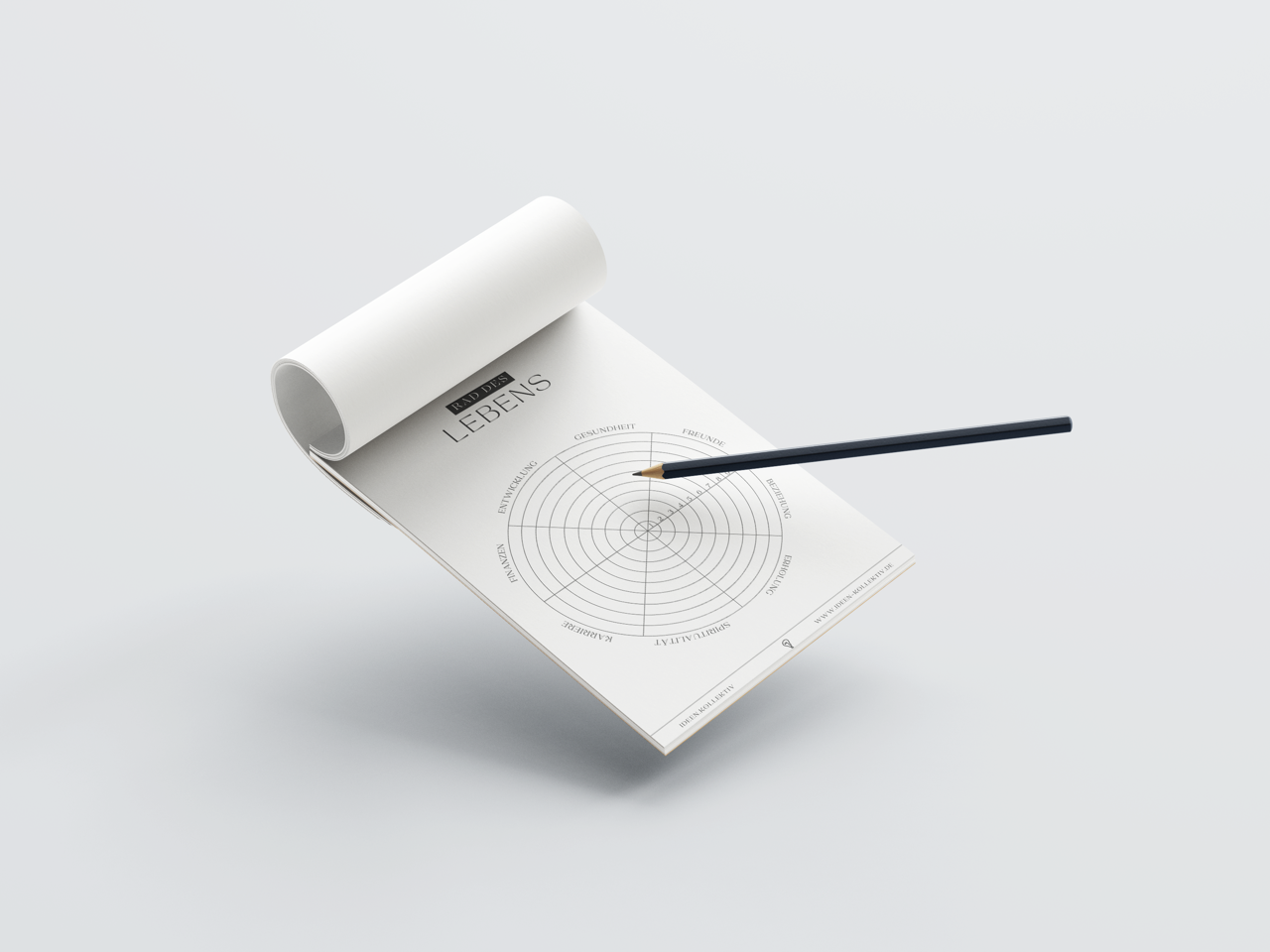
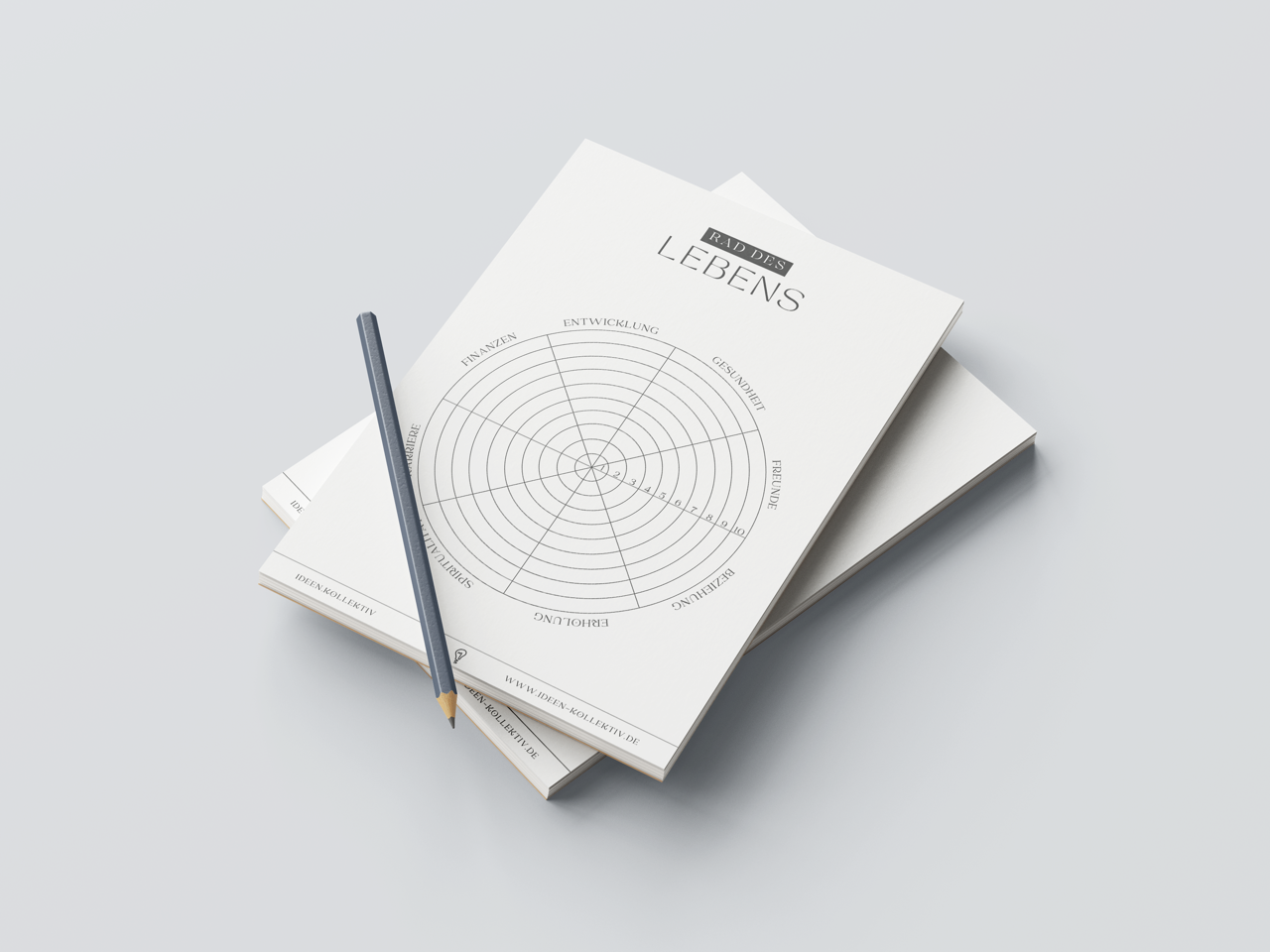
If you want to use the Wheel of Life regularly, the "Wheel of Life – Coaching Pad" is a practical tool. With 50 pre-made worksheets, you can document your development, track changes, and continually adjust your goals. The pad is ideal for anyone who wants to structure their self-reflection or use the Wheel of Life in coaching and group work.
Achieve More Clarity and Balance with the Wheel of Life
The Wheel of Life is a versatile tool that helps you keep the big picture in view. It makes visible where you are already satisfied and where potential still lies dormant. With its help, you can set priorities, work specifically on changes, and gradually bring more balance into your life. Try the Wheel of Life – you’ll be surprised at how much clarity and motivation it gives you.