A simple, quickly deployable tool with which teams can recognize cognitive traps, strengthen collaboration, and find better solutions together.
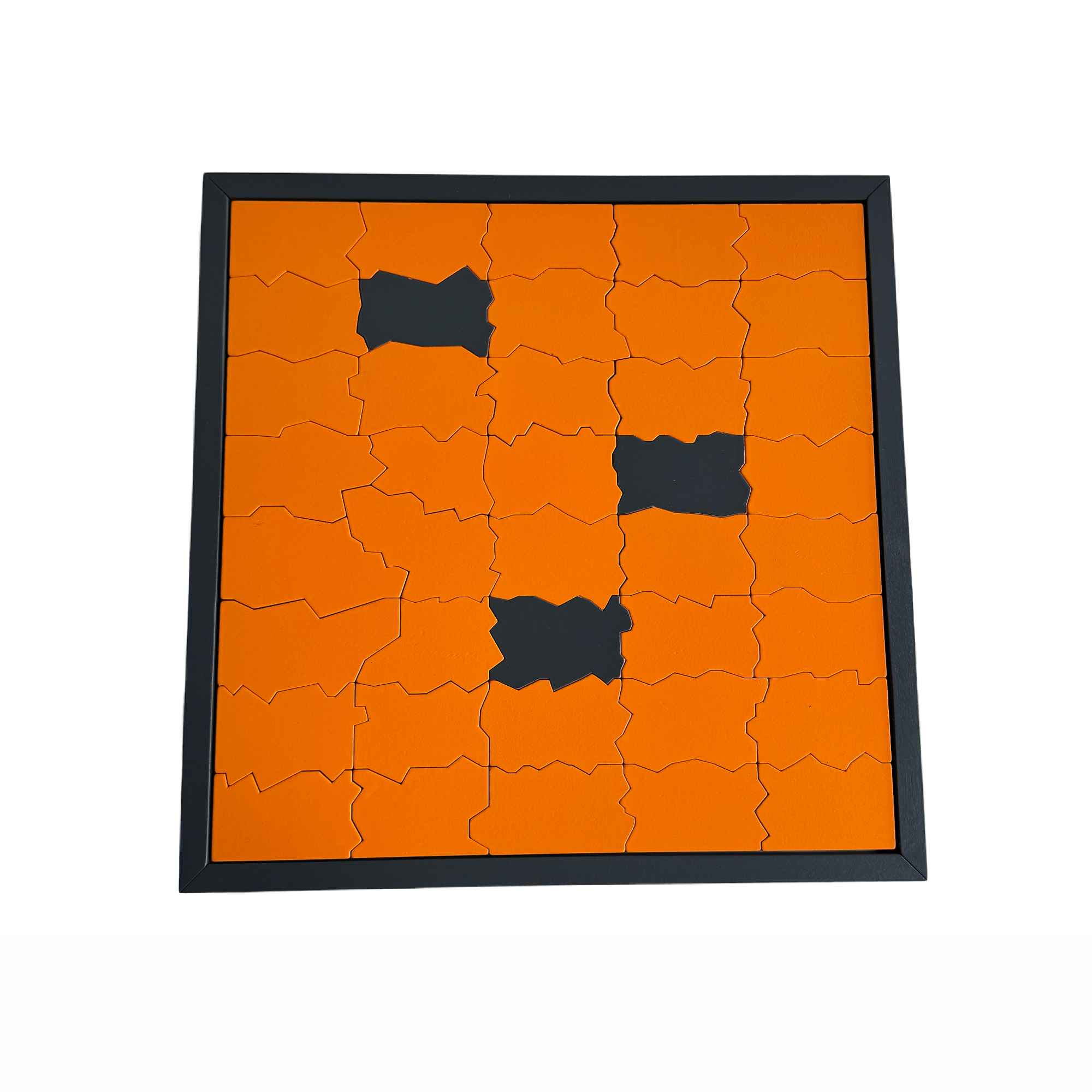
At first, it seems unremarkable: 40 wooden pieces, a frame, clear shapes. A task that looks like “We can do this right away.” But as soon as a team starts to lay the Puzzle, something emerges that has a surprising amount to do with everyday work life: routines, assumptions, blind spots — and the question of how open a team really is to new perspectives.
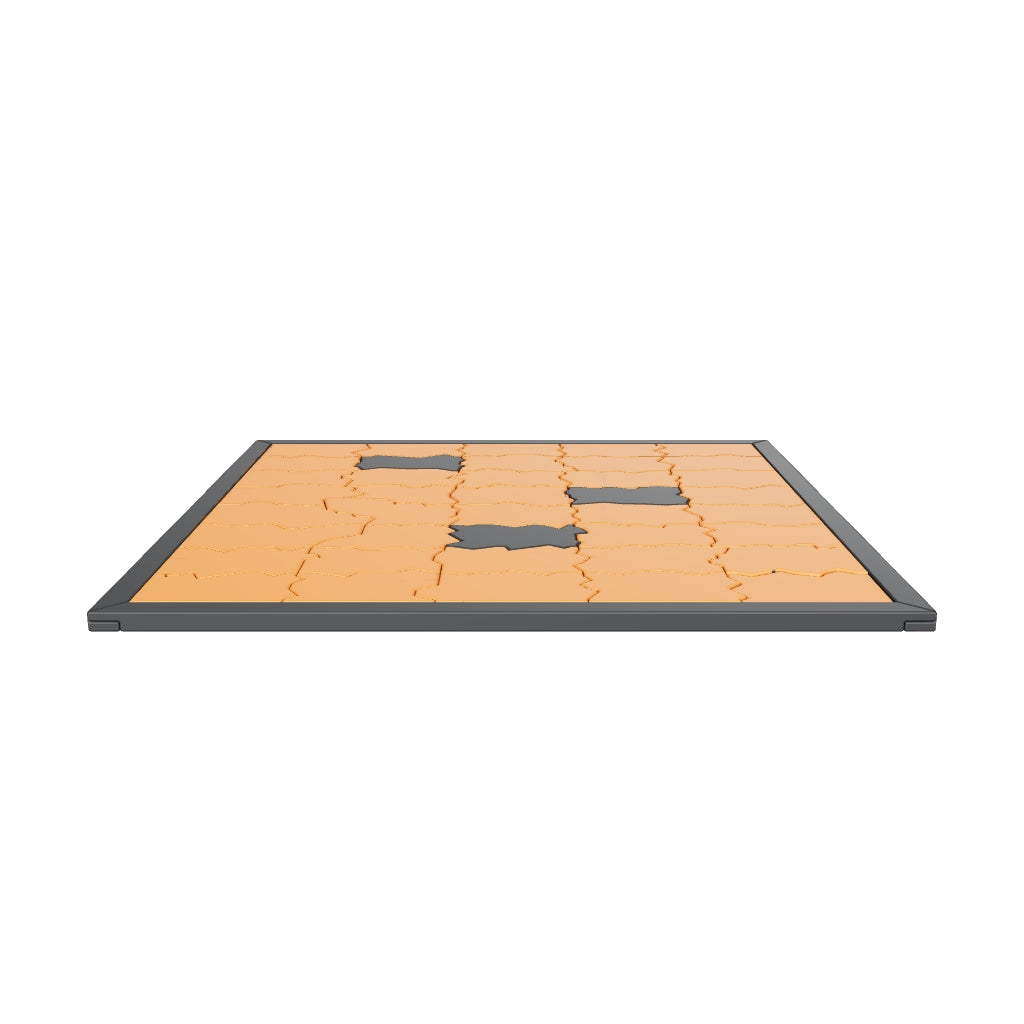
With the Team Puzzle, three of the pieces don’t fit as everyone intuitively expects. Only when someone has the courage to change perspective and flip individual pieces does the picture come together. This is exactly where the learning moment arises: It’s not the puzzle that is difficult — our assumptions are.
The Team Puzzle is not a toy but a professional, high-quality tool for group processes. It makes visible how teams think, decide, and collaborate — and how alternative solutions emerge when routines are questioned. Ideal for team development, workshops, coaching, schools, supervision, and educational settings.
Why the Team Puzzle works so well in modern teams
In organizations, projects, schools, or consulting situations, we repeatedly encounter the same patterns:
- Teams get stuck in familiar solution paths
- Decisions are based on unspoken expectations
- Discussions go in circles without anything becoming clear
- Responsibility and roles remain vague instead of reflected upon
The Team Puzzle shifts the process from talking to experiencing.
Instead of abstract analysis, a shared situation arises in which:
- Collaboration becomes observable
- Cognitive traps become visible
- Decision-making behavior becomes clear
- Reflection gains a concrete foundation
What was previously vague becomes a clear picture in the room. That’s exactly why the exercise has a lasting effect — it is not only understood but experienced.
Training Goals Supported by the Tool:
- Perspective Shift and Creative Problem Solving
- Collaboration, Role Perception, and Communication
- Dealing with uncertainty and frustration
- Recognize and make team dynamics discussable
- Create transfer to real work and project situations
Teams experience not only how they work — but understand why they work that way.
Case study from practice: “We did everything right — didn’t we?”
Setting: A workshop with eight people from an IT team.
Initial situation: Projects repeatedly get stuck at the same points.
Goal: Make blockages visible and develop new solution strategies.
The trainer places the team puzzle on the table and briefly explains the task. The team works focused, structured, with clear assumptions about “how it should be done.” But with every minute, it becomes clearer: something doesn’t fit.
Discussions arise. Someone suggests continuing at another corner. Others stick to the familiar approach. For a long time, it remains unspoken that everyone shares the same assumption.
Then a participant turns a piece — and it fits. The room goes quiet. Then laughter. Then insight.
Typical reflection statements:
- “We didn’t even consider that there might be another option.”
- “I had the idea earlier — but I didn’t want to suggest anything ‘illogical.’”
- “We spent more energy on justifying than on trying things out.”
Then follows the transfer to everyday work life:
- In which projects does this happen to you as well?
- Where do you stick to routines even though alternatives are possible?
- Where do blockages arise from unspoken expectations?
The puzzle thus becomes a mirror of real team processes — visible, concrete, and without moralizing.
🟡 Preparation
- Lay out the frame pieces
- Place puzzle pieces in the center
- Do not give additional hints (crucial for the aha moment)
🟢 Process
- The team works together — without a designated leader
- The facilitator observes:
- Communication
- Decision-making behavior
- Collaboration
- In case of uncertainty or getting stuck, do not intervene
- Only after the solution comes the joint reflection
Key learning questions:
- What assumptions did you make — and when?
- Where could you have experimented?
- Who took the lead, who held back — and why?
- Which alternatives were left unspoken?
- Where do you experience this pattern in work or school contexts?
Game variants for different training goals
- Time pressure variant → effects of stress and prioritization
- Silent variant → observing nonverbal collaboration
- School variant → cooperation, concentration, frustration tolerance
This allows the Team Puzzle to be specifically adapted to workshop dynamics, coaching goals, and group sizes — from 1:1 settings to team groups.
Why the change of perspective is so powerful
The decisive moment doesn’t happen when placing the pieces correctly — but at the moment of turning them over.
Teams realize:
- We thought too narrowly
- We shared the same assumption
- Innovation begins where routine ends
Or phrased with quiet irony:
“The piece wasn’t wrong — only our idea of it was.”
This learning moment lasts — because it is experienced and not explained.
Materiality, tactile feel, and spatial impact
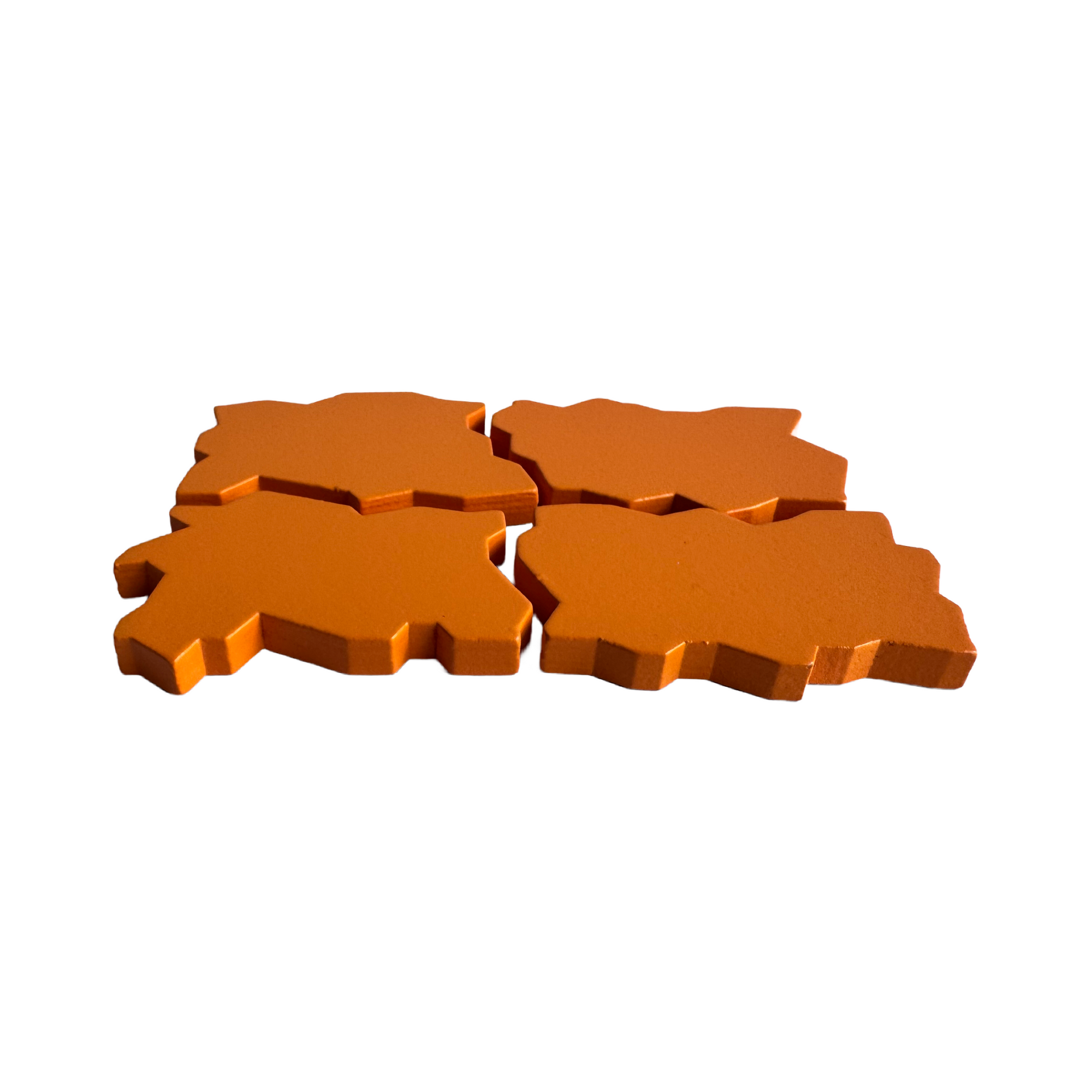
The Team Puzzle consists of 44 sturdy beech wood pieces, printed on both sides. The pleasant tactile feel immediately invites teams to try it out and supports focused, collaborative work — without lengthy explanation.
It promotes:
- focused work instead of abstract discussion
- joint exploration and structuring
- calm, clear process facilitation within the team
The material is high-quality and professional — ideal for training rooms, educational contexts, coaching settings, and team development.
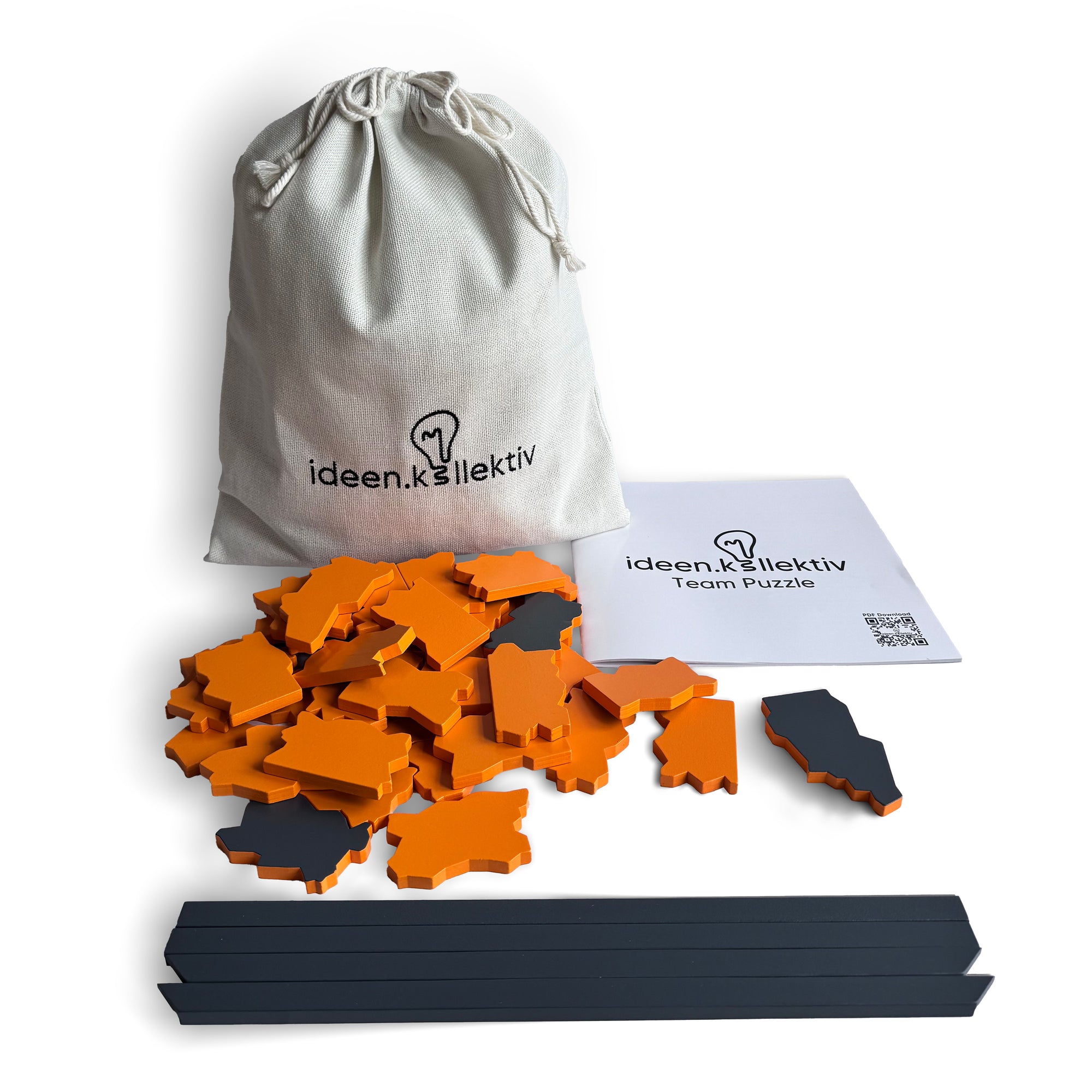
Scope of delivery:
- 40 puzzle pieces
- 4 frame pieces
- Storage bag
- Instructions with game variants (multilingual)
- high-quality packaging
Ready to use — quickly set up, flexibly integrable into workshops, coaching processes, and learning settings.
🎯 For which target groups is the Team Puzzle ideal?
- Coaches, trainers, and organizational development
- School and educational work
- Therapy, counseling, and social institutions
- Team development, workshops, and reflection processes
One tool — many contexts. Scalable from 1:1 work to group workshops.
👉 Would you like to use the Team Puzzle in your next workshop?
It is flexibly adaptable, quickly integrable, and ensures clear, comprehensible learning experiences — with an aha moment that lasts.