How Good Game Ideas Create True Inclusion 🤝
Imagine being invited to play – but the game isn’t meant for you. The rules? Made for those who can see, hear, speak, and sprint. Everyone else? They’re allowed to play – somehow. Sounds like inclusion, but it’s often just well-meaning exclusion in a fancy disguise.
Let’s be honest: When you see “inclusive team game” – what do you think? Maybe that someone in a wheelchair can join? Or that a visually impaired person is “somehow included”? Well-intentioned, but not really thought through. Because inclusion often ends where the game begins – with the rules. And what happens then is often a “just being there is enough” situation, where no one really gets to play.
True inclusion? It doesn’t mean “generously letting someone participate.” It means designing the game from the start so that truly everyone can join in. Not “despite,” but because of that. And that makes games better, more exciting – and often much more fun.
🚫 Why Classic Games Ruthlessly Exclude
Most group games don’t mean harm – they just think too small. They assume everyone can see well, hear clearly, speak distinctly, and run fast. But what if that’s not possible?
- 👁️ Seeing: Distinguishing colors? Recognizing images? Impossible for many with visual impairments.
- 👂 Hearing: Understanding announcements? Responding to calls? Only works with good hearing.
- 🗣️ Speaking: Explaining terms? Cheering on? No chance without a voice.
And what happens then? Usually, it’s: “You can just watch – it’s exciting too!” Or: “We’ll just adjust it for you.” Sounds nice. But it’s often like putting a bandage on a splinter – it doesn’t really help.
But luckily: It can be different. And how, two games show that turn everything upside down – with lots of fun.
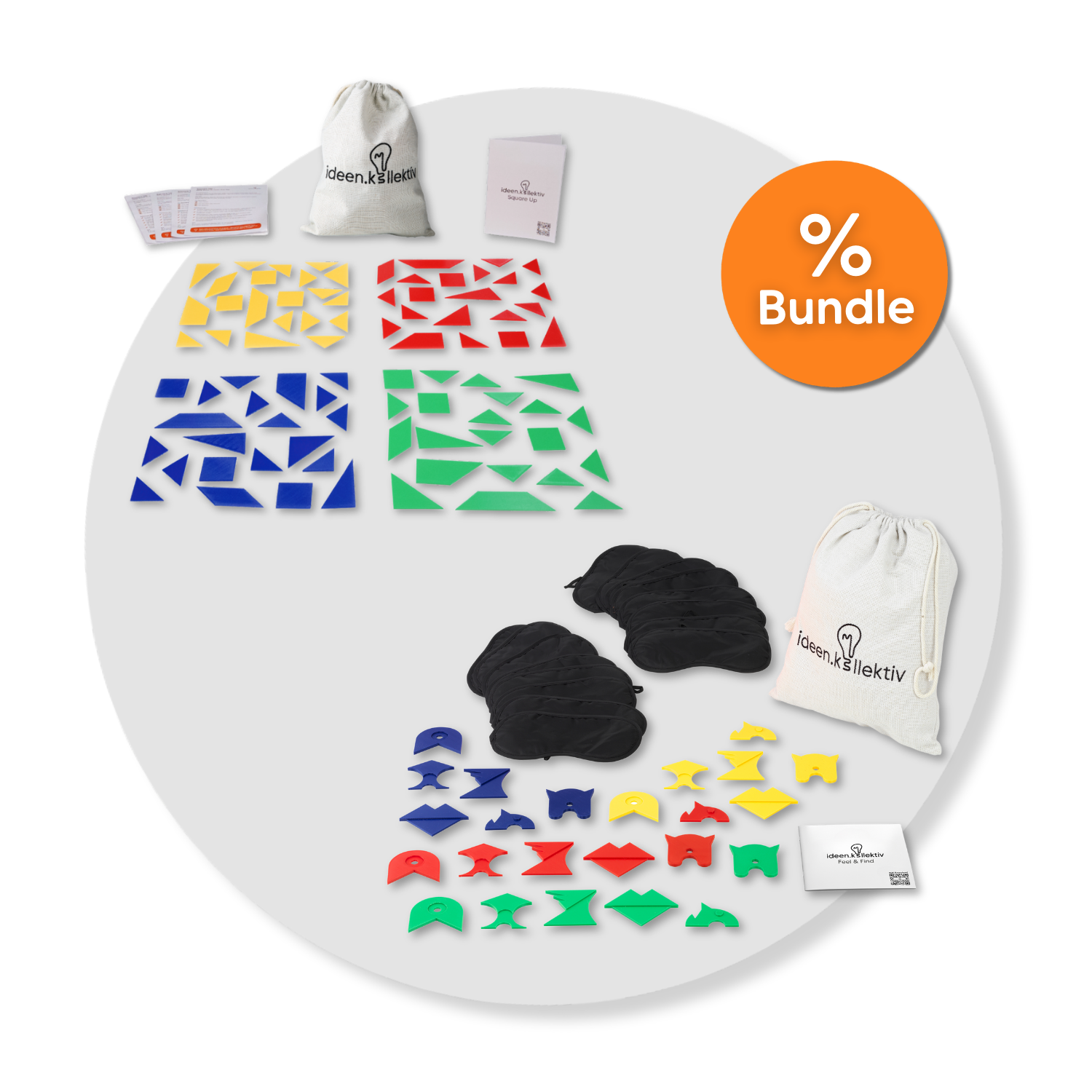
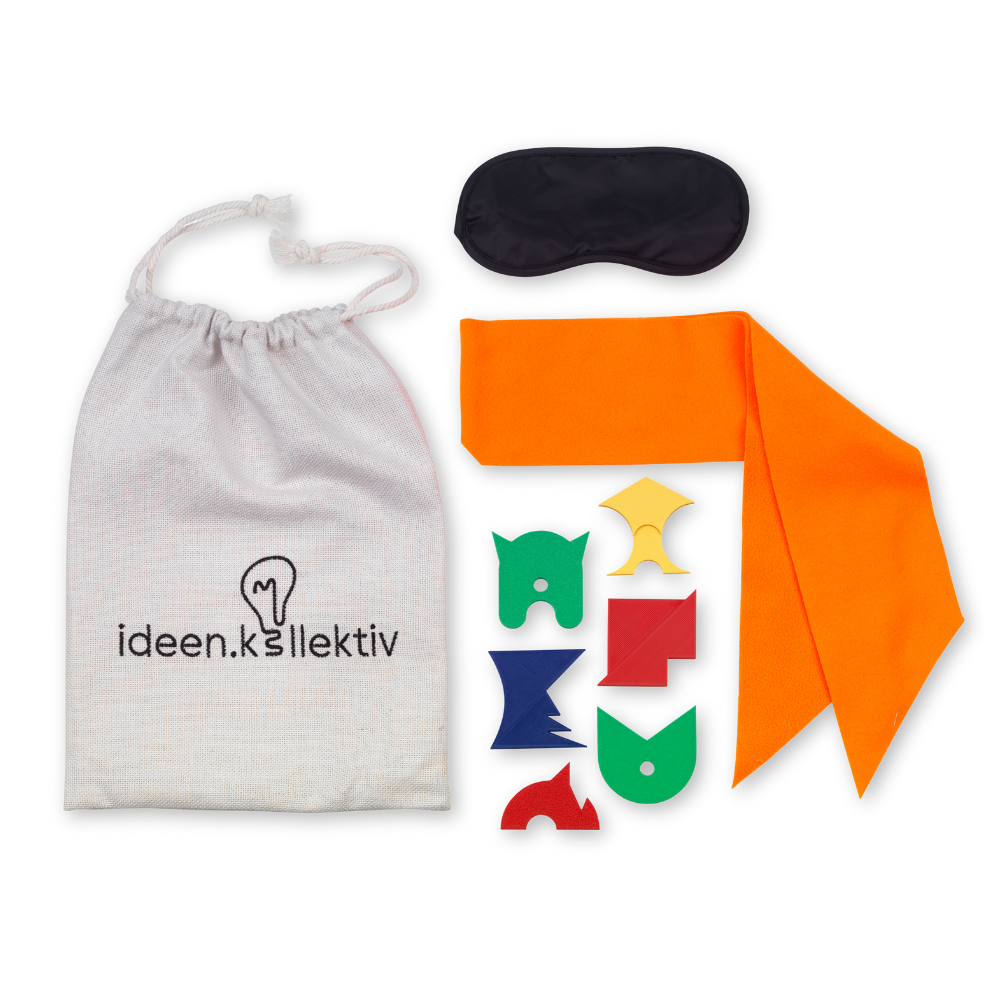
🙈 Feel & Find: All Blind, All Equal
Blindfold your eyes – and off you go. Here you touch, guess, and feel. Patterns, shapes, combinations? All sensed only with your hands. No colors. No glances. No advantage.
For people with visual impairments? A home game. For everyone else? A real change of perspective.
🎯 What the game can do:
- Makes the sense of touch the star
- Eliminates visual differences
- Shows: In the dark, everyone plays fair
👉 Curious about Feel & Find? This way!
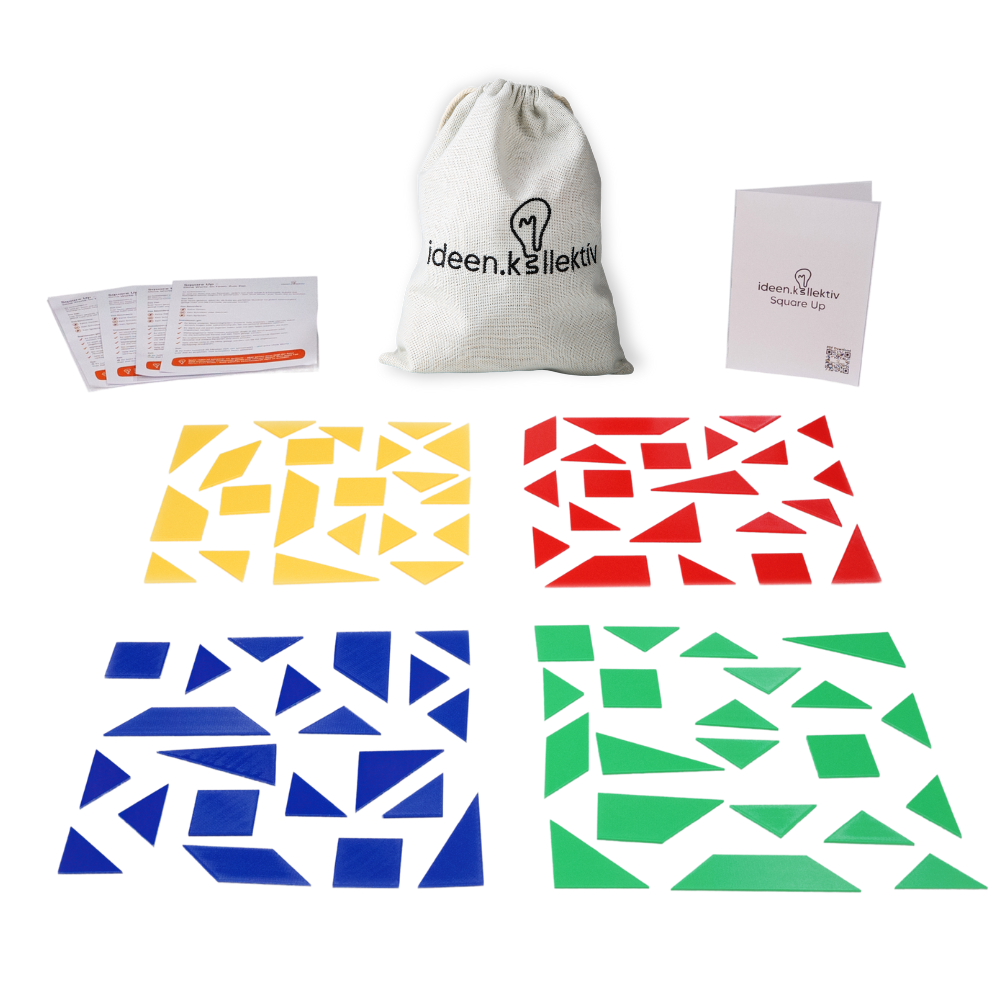
🤫 Square Up: Talking is Silver, Silence is Mandatory
A communication game – but without words. No whispering, no shouting, no “Wrong piece, try here!” Only gestures, glances, movement. Suddenly body language becomes a superpower.
🎯 What the game can do:
- Stops dominance in speaking
- Works great with deaf players
- Creates a level playing field for everyone – without language
👉 Learn more about Square Up here!
Both games show: Inclusion isn’t just the cherry on top – it’s the dough from which good games are baked. When the rules are right, no one is just kindly invited – but right in the middle, with real game roles. That’s fun. And meaningful.
🌍 How Inclusion is Played Beyond Our Borders
Did you know, for example, that in Mongolia there is a traditional dice game played with small bones – where skill counts more than strength or speed? Or that among indigenous peoples in South America, games often tell stories – so people with cognitive impairments can participate in their own way?
Long before we discussed “accessibility” in Europe, many cultures already lived inclusion through games. In North America, indigenous communities used cooperative games to strengthen unity – no one was excluded. Everyone contributed something.
In Africa, rhythmic movement games like “Ampe” emerged, involving all age groups – without complicated rules, without pressure to perform. Just join in. Just belong.
In Asia, too, many traditional games focus on team spirit rather than competition: In the Japanese game “Darumasan ga Koronda” (a kind of “Red Light, Green Light”), reaction skills are needed, but no loud shouting or physical strength. Everyone can play – in their own way.
And today? Projects like “Play Unified” by Special Olympics show: People with and without disabilities can play together – with the same rules, the same goals, on equal footing.
What we learn from this: Inclusion isn’t a new idea. It’s ancient – we just need to listen again. And start thinking differently. Those who look beyond their own horizon discover long-lived diversity – and get plenty of inspiration for new game ideas.
All this makes games not only more inclusive – but simply better.
✅ Enough with: "Just Being There is Enough"!
Let’s remember the beginning: There was talk of games made for some – and not for many. Of well-meaning participation that feels more like just sitting along. But it can be different. And we’ve seen it – in games like Feel & Find, Square Up, or in cultures that have always focused on community instead of exclusion.
What we need are games that don’t adapt, but invite. That don’t start from deficits, but from diversity. That spark curiosity about what happens when everyone can bring their own unique strengths.
Because when everyone plays, it no longer matters who is different – but only how well we are together.