How Images Become Catalysts for Change
In a world increasingly dominated by language, analysis, and data, many coaches and consultants are rediscovering the power of imagery. Metaphors are more than linguistic play—they are mental bridges that make complex feelings, thought processes, and relationship patterns tangible. Especially in coaching and consulting, metaphors have proven to be powerful tools for making the invisible visible, opening new perspectives, and initiating change.
But how can these inner images be systematically integrated into the coaching process? What role do symbol work and visual stimuli play in self-reflection? And how can simple tools like image cards create lasting impulses?
What Are Metaphors—and Why Are They So Effective in Coaching?
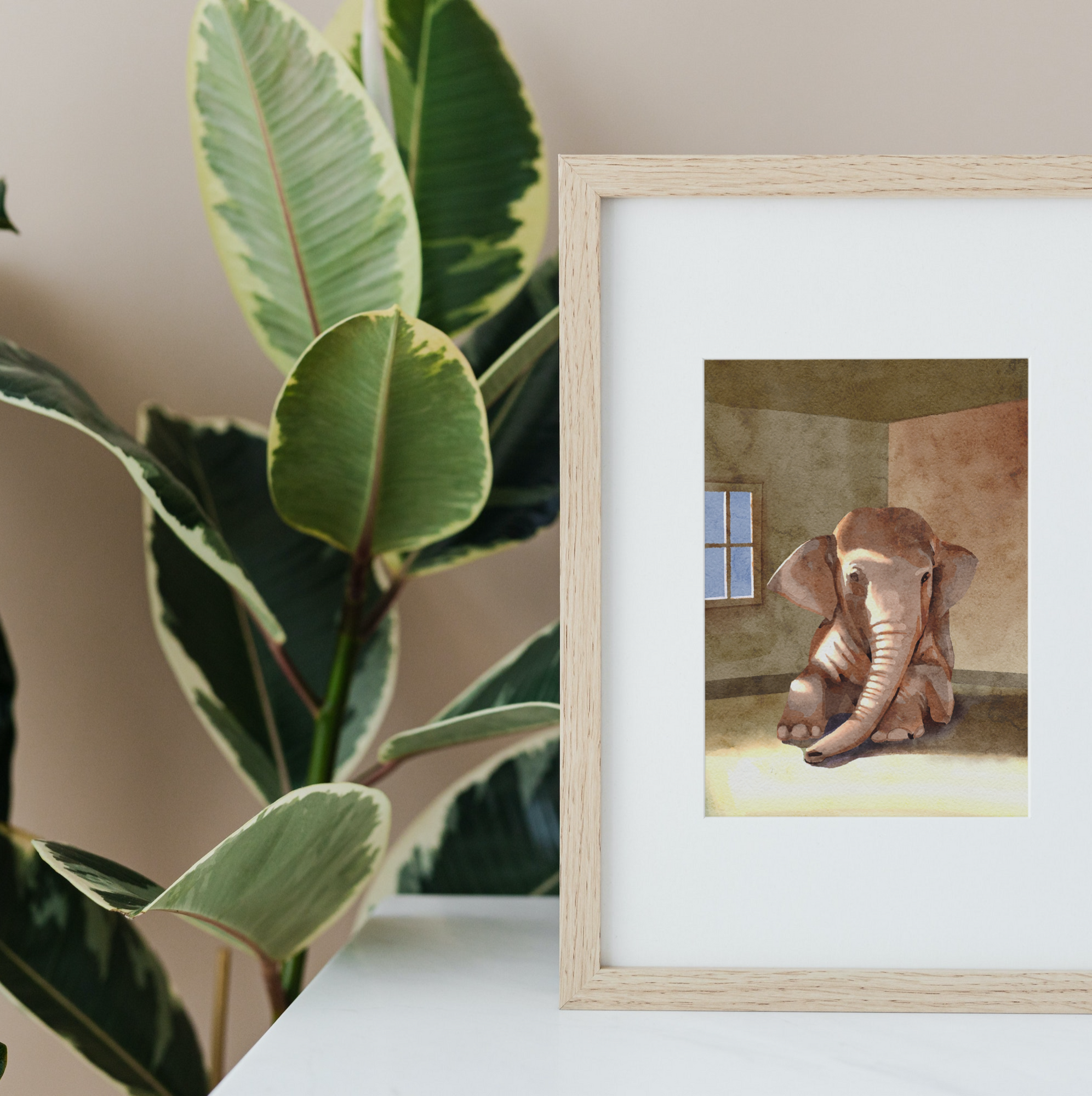
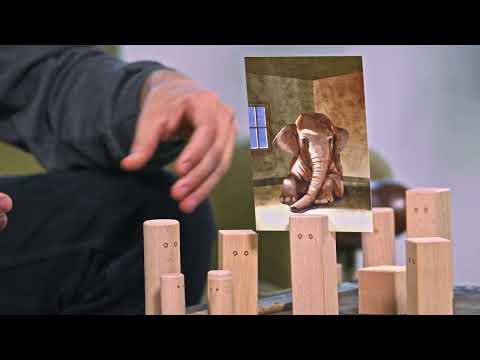
We encounter metaphors daily, often unconsciously. We talk about the “board in front of the head,” the “golden cage,” or the proverbial “elephant in the room.” These linguistic images give form to inner states, ways of thinking, or social dynamics—they make the abstract tangible.
In coaching practice, metaphors are particularly effective:
- They open conversational spaces where difficult topics can be gently addressed.
- They connect head and heart by engaging both cognitive and emotional levels.
- They facilitate perspective shifts because an image can be interpreted in many ways.
- They activate resources by symbolizing inner parts, desires, or values.
From a psychological perspective, metaphors act like internal maps. They help clients better understand themselves—and coaches to intervene purposefully without being directive. Especially when working with the Inner Team, in value processes, in business coaching, or team development, they provide a safe framework to bring up issues that might otherwise remain unspoken.
How Can Metaphors Be Used Practically?
A common approach is so-called symbol work: deliberately using image cards, symbols, or objects to externalize thoughts and emotions. Particularly helpful are card methods—they introduce visual stimuli, encourage association, and invite reflection.
Examples from practice:
- In individual coaching, clients can choose a card that symbolizes their current situation—such as an image of a “turning point,” a “mountain peak,” or a “ticking time bomb.”
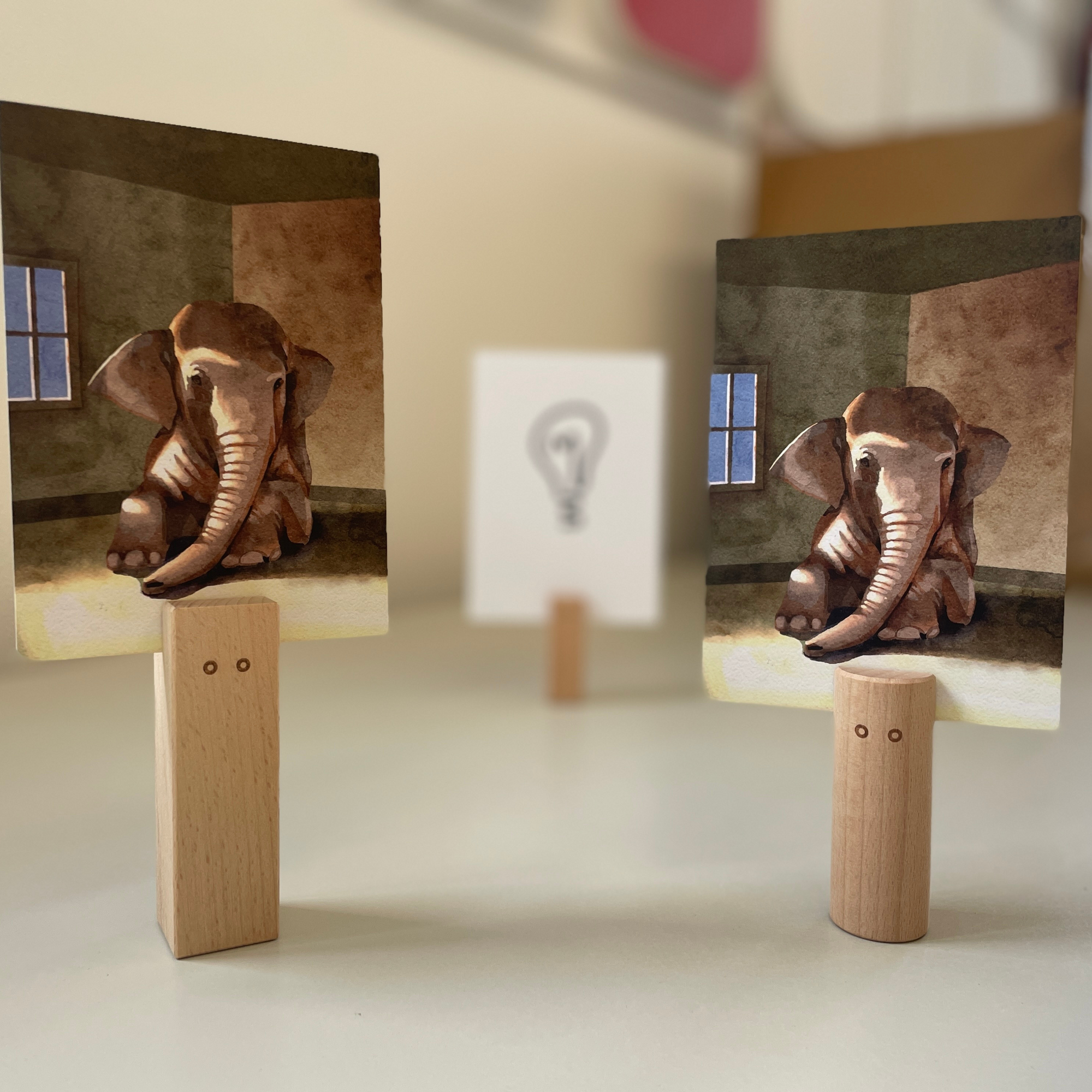
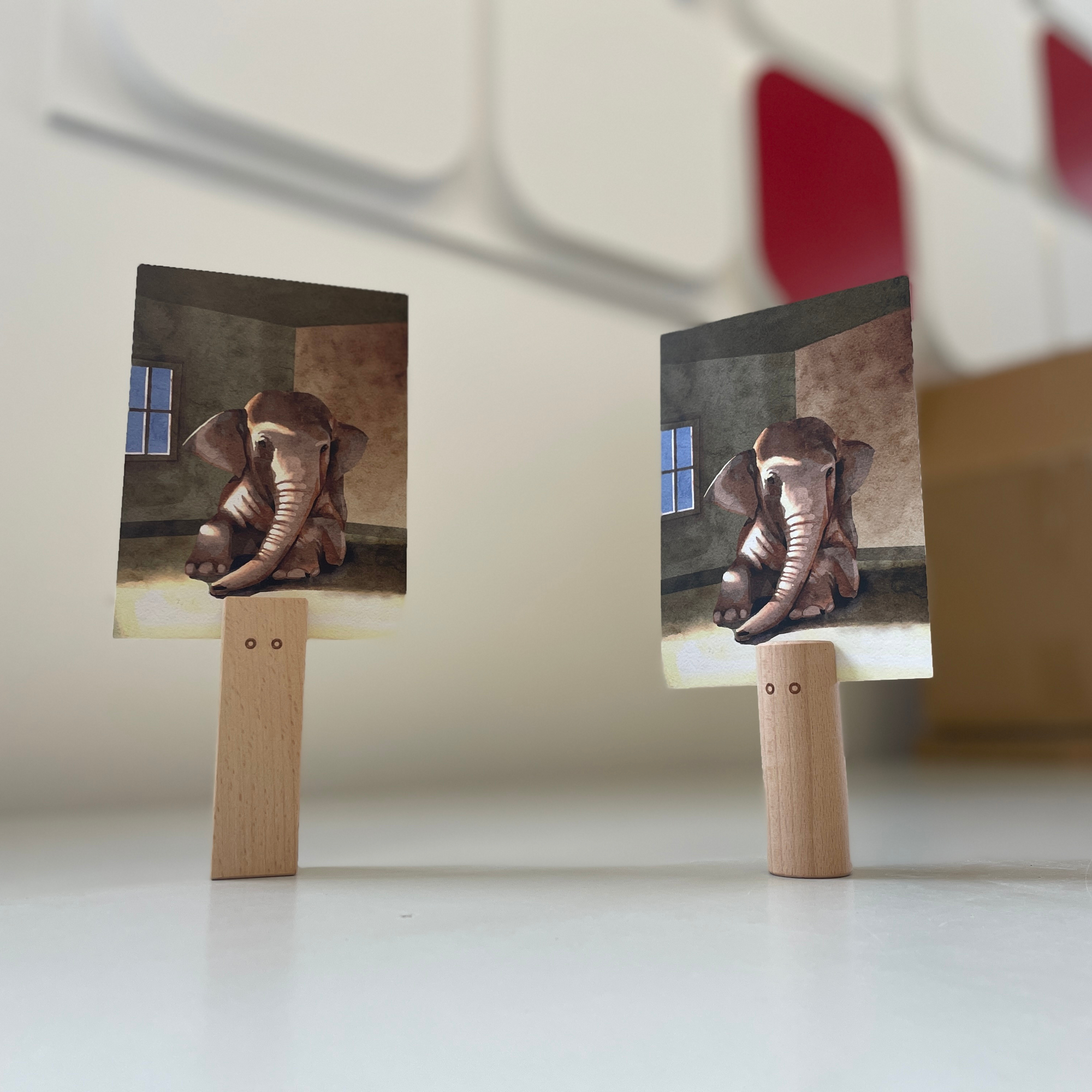
- In team facilitation, the “elephant in the room” can be made visible—as an entry point into a difficult topic.
- In constellations with the system board, metaphors can be used to symbolically locate inner parts or interpersonal tensions.
This is where a well-designed tool comes in, developed specifically for such coaching situations: the Metaphor Cards from ideen.kollektiv.
Metaphor Cards as a Professional Tool in Coaching
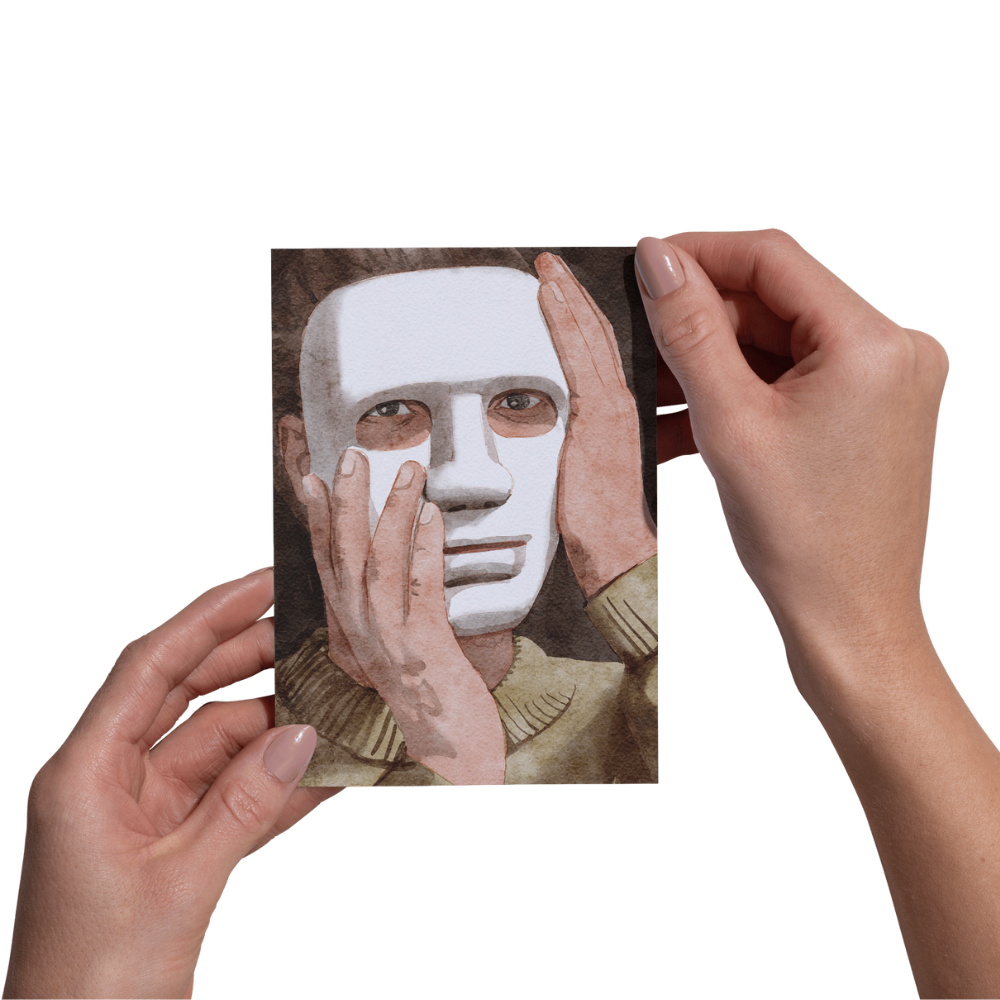
The Metaphor Cards consist of a collection of visually designed terms—powerful metaphors that can be easily used in coaching and consulting situations. Each card features a hand-painted watercolor motif representing a classic saying or an inner image—from the “rose-colored glasses” to the “board in front of the head.”
What makes them especially effective:
- Variety of motifs: The cards cover typical coaching themes—values, blockages, roles, dynamics.
- High-quality design: Durable cardboard material, matte print, climate-neutral production in Germany.
- Flexible use: Suitable for individual settings, group work, online coaching, or combined with system board figures.
By deliberately introducing a metaphor card, topics can often be grasped more quickly—the entry into conversation is eased, and new perspectives open up.
Combination with Feeling Cards and System Board
The metaphor cards can be ideally combined with other tools from the coaching area. For example, with the Feeling Cards from ideen.kollektiv, which display a wide range of emotions and thus enable even more nuanced reflections. Or in connection with the system board accessories, where the cards can be attached to figures or placed in constellations.
This creates a lively coaching process that enables deeper insights through symbolism and visualization. The cards never serve as a solution—but they open spaces for insights that would otherwise remain hidden.
Conclusion
Metaphors are signposts in change processes. They help name things without having to say them directly. They invite perspective shifts and promote self-reflection. Working with metaphors—especially with deliberately designed metaphor cards—is therefore more than a nice tool: it is an access to hidden meanings, a bridge between language and feeling.
For coaches and consultants seeking effective visualization methods, metaphor cards can be a valuable enrichment—whether as an entry point, an impulse, or to deepen complex topics.
And if you’re now wondering which metaphor might describe your current coaching question—perhaps the elephant in the room is already there…