und Videos zu sehen




About the Drama Triangle
 |
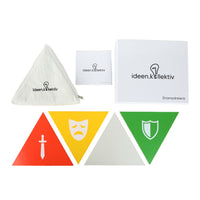
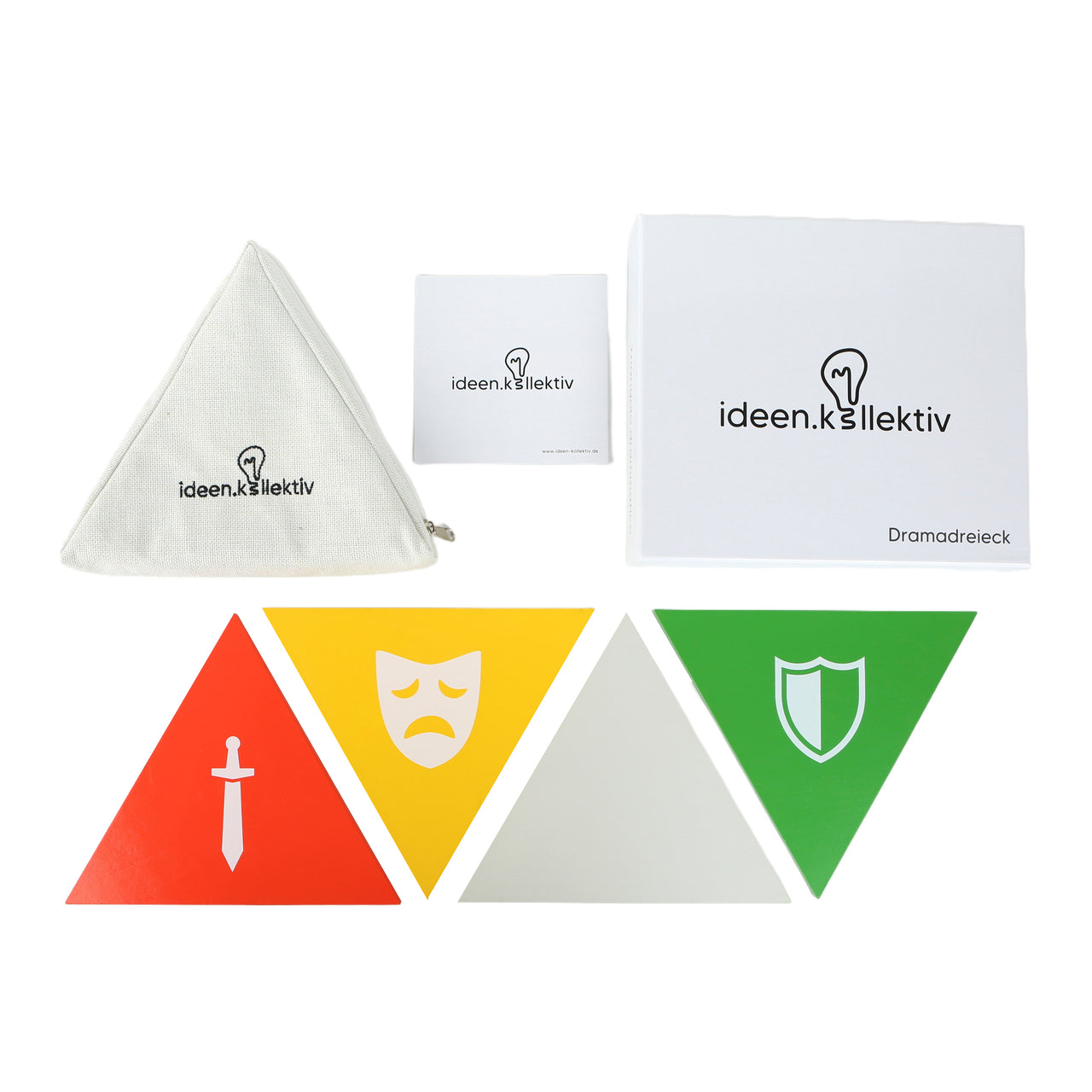
Thoughtful design with clear symbolismEach of the four colored triangles is made of beech wood and finely crafted. The colors—red, yellow, green (and gray)—symbolize the roles in the Drama Triangle: the sword (persecutor), the mask (victim), the shield (rescuer), and the neutral triangle in gray as the exit from the dynamic. All symbols are printed on one side, so the set can be used either with visible symbols or solely through color logic. This keeps the material versatile—from clear representation to free, symbol-open work. |
Psychologically sound model with clear structureThe Drama Triangle is based on Stephen Karpman’s model and represents the roles of victim, rescuer, and persecutor in a simple and illustrative way. By physically arranging the triangles, typical patterns and interactions can be made visible. The central gray triangle stands for the neutral observer role—the conscious step out of the drama. This turns a theoretical model into a tangible, practical tool that makes change visible.
|
 |
 |
Versatile use in coaching, therapy, and trainingThe Drama Triangle can be used in individual coaching, groups, or psychological work—both on the table and on the floor, for example in connection with figures or symbols. It also offers a clear structure in workshops, supervisions, and team developments to clarify roles, reflect on responsibility, and encourage new perspectives. Its simple shape and color design keep it easy to understand and ready to use immediately.
|
Clarity and awareness in the processThe visual representation helps to decipher emotional dynamics and get conversations to the point. The Drama Triangle creates space for self-reflection and supports recognizing patterns, taking responsibility, and consciously adopting different positions. This makes it a powerful companion for anyone looking to promote clarity and change in communication, relationships, and collaboration. |
 |